
Performance Anxiety: When Excellence Becomes a Burden
The game is in an hour. The presentation is tomorrow. Your partner is right there.
And your brain has already decided something is about to go wrong.
Performance anxiety hijacks the moments that matter most, your career, your sport, your sex life, and turns anticipation into dread. If you’ve ever frozen, spiraled, or gone blank when it counted, this is for you.
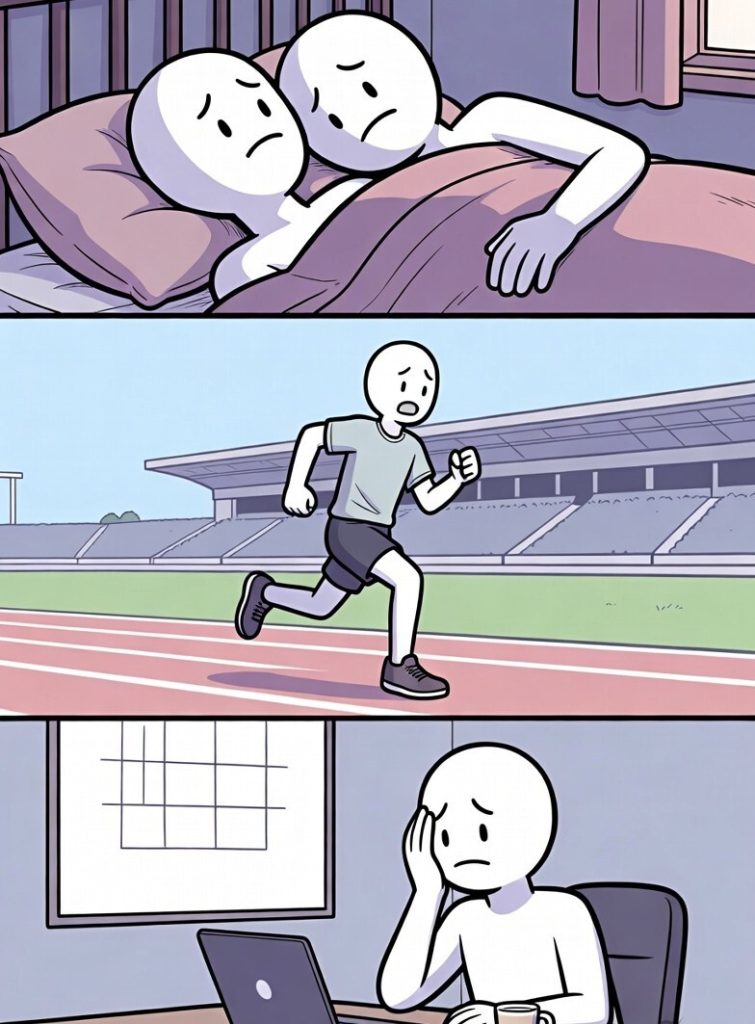
Table of Contents
What Does Performance Anxiety Feel Like?
Performance anxiety doesn’t introduce itself gently. It arrives as a racing heart, trembling hand, dry mouth, nausea. Your breathing becomes shallow and rapid, your mind fixates on every possible way things could go wrong. Relaxing, focusing on the task at hand is just not possible anymore.
For many, the thoughts are even more distressing than the physical symptoms. They are intrusive and relentless, “Everyone will see I’m incompetent.” “I’m going to fail.” “She will think I’m pathetic.” The mind may go completely blank at the crucial moment, as if a circuit breaker has been tripped. Concentration disappears. What usually feels automatic and easy, suddenly requires exhausting conscious effort.
Beyond the immediate experience, performance anxiety creates a pervasive sense of dread in the days or weeks leading up to the anticipated event. Sleep becomes disrupted. The stomach churns, having no appetite, or even feeling nauseous. Life narrows around the fear of not performing, with little mental space for anything else.
Performance Anxiety in Sports
Athletes with performance anxiety say that their bodies, trained to perform with precision, suddenly feel foreign and uncooperative. A tennis player who has executed thousands of perfect serves finds their arm stiffening as they prepare to serve at match point. A footballer’s legs feel heavy and unresponsive during a penalty kick. The well-practiced, effortless, automatic movements become imprecise under competitive pressure.
The mental experiences are disrupted as well. Rather than entering a focused, flow-like state associated with peak performance, anxious athletes find themselves trapped in their own heads. They’re simultaneously trying to execute a technique, monitor their anxiety, anticipate failure, and manage the cascade of physical symptoms. This cognitive noise makes performance nearly impossible.
What Friends and Teammates Notice
Teammates often observe withdrawal before important competitions. A sportsman who usually brings energy to the field becomes quiet and distant. They may arrive later than usual, avoiding pre-game interaction. Some develop superstitious rituals that become increasingly complex, desperate attempts to control the uncontrollable.
During the competition the change in performance becomes obvious. Movements appear tentative and forced rather than fluid and instinctive. Decision-making slows, and avoidance becomes apparent. Not going for the hard shots, not pushing it before the finish line.
What Coaches Should Understand
Anxiety is not a lack of skill or motivation. An athlete with performance anxiety typically does well during practice but struggles when the competition starts. Their technical ability remains intact, but their capacity to perform it under pressure has become compromised.
Coaches who respond with more pressure, “Just relax!” “Stop thinking so much!” “You’ve done this a thousand times!”, typically make things worse. These well-meaning but invalidating interventions inadvertently communicate that the athlete’s anxiety is a simple problem they’re choosing not to solve, rather than a genuine psychological challenge that requires specific intervention.
Effective coaching means understanding that performance anxiety requires systematic desensitisation to competitive pressure, not simply more technical training or motivational speeches.
Performance Anxiety at Work: The Imposter in the Boardroom
From the Professional’s Perspective
Work-related performance anxiety turns routine activities into nightmares. A presentation to colleagues can trigger the same physiological response as a life-threatening physical danger. Job interviews become so anxiety-provoking that capable professionals avoid career advancement altogether. Video calls may create a persistent, low-grade anxiety about being watched and evaluated.
Performance anxiety experiences often include a profound sense of fraudulence, a conviction that colleagues will discover you don’t really belong in your role. This “impostor syndrome” maintains a state of vigilant self-monitoring. Every interaction becomes an opportunity to worry about being exposed. Successes get dismissed as luck, while failures confirm deeply held beliefs about inadequacy.
Anxiety about specific tasks, like public speaking, presentations, networking events, often generalises over time. An initial nervousness about formal presentations can expand into all interactions, like contributing to team meetings, making phone calls, or even writing emails that colleagues may scrutinise.
What Colleagues Observe
Colleagues frequently misinterpret the signs of performance anxiety. The person who consistently avoids volunteering for presentations may be perceived as lazy rather than anxious. Someone who speaks very little in meetings might be viewed as disengaged rather than terrified of saying the wrong thing.
Performance anxiety can also lead to perfectionism or procrastination. You may set too high standards for yourself, and work gets refined endlessly because it never feels “good enough”. On the opposite end, you may start to procrastinate, only completing work at the last possible moment when time pressure exceeds anxiety.
Withdrawing from friends or colleagues often comes with work-related performance anxiety. Lunch invitations get declined. After-work gatherings are avoided. You may join meetings the last second and leave immediately after, avoiding any chance to have an informal interaction.
What Managers Should Know
Performance anxiety is neither low commitment nor poor capability. In fact, anxious employees often work harder than their peers, to overcompensate through preparation and effort. They may be the most conscientious team members, yet their anxiety prevents them from showcasing their abilities when visibility would matter the most.
Traditional performance management approaches, such as high-stakes presentation-opportunities, surprise evaluations, public recognition, can be counterproductive for anxious employees. These individuals often thrive with clear expectations, predictable evaluation criteria, and opportunities to demonstrate competence in less anxiety-provoking formats before moving to higher-stakes situations.
Creating psychologically safe environments where mistakes are normalised as learning opportunities, rather than career-limiting events, helps anxious professionals gradually build confidence.
Performance Anxiety and Sex: When Intimacy Feels Like a Test
From the Individual’s Perspective
Sexual performance anxiety transforms intimacy into an evaluative performance with pass/fail stakes. The failure is not about the act itself, but it feels like it’s our own failure. Rather than experiencing pleasure and connection, you may become a detached observer of your body, monitoring and judging your responses. This hyper-vigilant self-monitoring (“spectatoring”) directly interferes with sexual arousal and function. Put simply, hyper-vigilance is incompatible with sex.
For individuals with sexual performance anxiety, even the thoughts of having sex can trigger an exhausting internal monologue: “Am I taking too long?” “Is my partner getting bored?” “What if I can’t perform?” “What if I disappoint them?”, creating confusion and fear, rather than excitement.
The thoughts then become self-fulfilling. Anxiety about erectile difficulties makes them more likely. Worry about delayed orgasm creates tension that prevents it. Concern about not satisfying a partner creates distraction that ensures dissatisfaction. Each event, incorrectly interpreted as “failure”, reinforces anxiety, making subsequent encounters even more unpleasant.
What Partners Notice and Wonder
Partners often feel confused and hurt by changes in intimate behaviour. Initiation of sex often decreases or stops entirely. When intimacy does occur, the partner often notices an emotional distance, a physical presence without psychological connection. Affection that doesn’t lead to sex may be avoided because it triggers anxiety about expectations about sex to follow.
Many partners take these changes on themselves, thinking “Maybe they’re not attracted to me anymore.” “Perhaps they’re having an affair.” “I’m doing something wrong” Without understanding performance anxiety, a partner often assumes the problem is about them, their desirability, their technique, their worth.
Some partners notice their loved one seems focused elsewhere during intimacy, as if completing an assigned task rather than experiencing shared pleasure. There may be excessive checking: “Is this okay?” “Does this feel good?” “Am I doing this right?” While appearing considerate, these questions often reflect the anxious person’s need for reassurance rather than genuine curiosity about their pleasure.
What Partners Can Do (and Avoid)
Partners can help with sexual performance anxiety. Reassurance in itself rarely fixes it as anxious people typically dismiss positive feedback as politeness. Similarly, focusing on the “performance problem”, like discussing it repeatedly, or suggesting solutions, often makes anxiety worse by reinforcing that there is something broken that needs fixing.
However, there are a lot of things partners can do that’s helpful. Avoiding blame or frustration is probably the most important first step. Comments like “What’s wrong with you?” or “Why can’t you just relax?” typically deepen shame and avoidance. Sexual performance anxiety is a psychological challenge, not a choice.
You can also shift focus from performance to play and pleasure. Mutual fun is more important than specific outcomes. If intercourse happens, that’s great, but rolling around naked together is also fine. Have fun, not performance!
As sexual function naturally fluctuates based on stress, fatigue, and countless other factors, treating occasional imperfections as normal is the only right way to look at sex, it does not always need analysis.
Partners are not therapists, and while they can help, no one expects them partner to “fix” someone else’s anxiety. Professional support offers skills and interventions that a loving partner just cannot provide.
Regardless of how sex is going at the moment, do maintain non-sexual physical affection. Continue closeness without sexual expectations helps preserve intimacy while allowing anxiety to decrease.
When Does Performance Anxiety Begin?
Performance anxiety often emerges during teenage years or early adulthood. These developmental periods face heightened social evaluation and identity formation. A humiliating experience, like forgetting lines during a school play, failing in a sporting event, experiencing premature ejaculation during early sexual experiences, can establish a template of anxious anticipation that persists for decades.
In some cases, performance anxiety develops gradually without a clear triggering event. Perfectionism, family expectations, or anxious temperament can lead to performance anxiety as well. The first noticeable episode often occurs during a period of increased stress or when stakes feel particularly high, such as HSC preparations, university exams, professional presentations, or relationship milestones.
Importantly, later onset is also common. Life transitions, trauma, or significant perceived “failures” can trigger performance anxiety even if previously it was managed comfortably.
The Untreated Performance Anxiety
Research shows that performance anxiety rarely resolves spontaneously. Without help, the condition typically follows a progressive course of expansion and entrenchment.
Untreated performance anxiety often leads to increasingly restricted behaviours. What begins as anxiety about specific situations gradually expands. Your initial anxiety about formal presentations may eventually lead to avoiding contributing in meetings, making phone calls, or any situation involving potential evaluation.
This progressive avoidance brings long-term consequences. Over time, individuals with untreated social anxiety experience significantly lower academic achievement, reduced career advancement, and persistent relationship difficulties.
Untreated performance anxiety substantially increases risk for additional mental health problems. In fact, there is a 50-70% increased chance of developing major depressive disorder in the context of performance anxiety, as the chronic stress, social isolation, disappointments, create vulnerability to depression.
Physical Health Consequences
The chronic stress associated with untreated performance anxiety extends beyond psychological symptoms. A sustained activation of stress response systems leads to compromised immune function, cardiovascular strain, digestive problems, and chronic muscle tension. Sleep problems are nearly universal among individuals with performance anxiety, further compounding health impacts and risks.
Evidence-Based Treatment: What Works for Performance Anxiety
People often live with performance anxiety for 10-15 years before seeking therapy from psychologists. During this time, avoidance patterns become deeply ingrained, opportunities are missed, and secondary consequences accumulate. This delay in treatment is tragic because effective interventions exist and demonstrate consistently positive outcomes.
The encouraging reality is that performance anxiety responds well to psychological treatment. Three primary approaches demonstrate strong research support: cognitive behavioural therapy (CBT), potentially with exposure therapy, and mindfulness-based interventions.
Cognitive Behavioural Therapy (CBT)
Cognitive Behavioural Therapy (CBT) represents the most extensively researched treatment for performance anxiety and related disorders. This approach helps individuals identify and modify the thought patterns and behaviours that maintain anxiety.
The cognitive component addresses distorted thinking patterns common in performance anxiety, like catastrophic predictions, mind-reading, excessive self-focus, and harsh self-judgment. Through structured exercises, individuals learn to identify these thoughts as mental events rather than facts, then develop more balanced and realistic alternative perspectives.
The behavioural component helps with avoidance and better coping strategies. This includes behavioural experiments that test anxiety-driven predictions, systematic skill development, and gradually approaching rather than avoiding anxiety-provoking situations.
CBT for anxiety disorders typically involves 12-16 weekly sessions, with symptom reductions maintained even at a year later.
Exposure Therapy
Exposure therapy, often delivered as a component of CBT, is a systematic and gradual confrontation of feared performance situations. This approach directly addresses avoidance, the behaviour that maintains performance anxiety over time.
Rather than trying to talk you out of anxiety, exposure therapy recognises that anxiety naturally decreases through repeated, safe contact with ever-increasing difficulties of anxiety-provoking situations. The process follows a carefully created hierarchy, beginning with moderately anxiety-provoking situations and progressively moving toward more challenging scenarios.
Exposure therapy isn’t about forcing you through overwhelming anxiety during the first session. Effective exposure means remaining in an unpleasant but just tolerable situation long enough for anxiety to naturally decrease.
The effects of exposure therapy are remarkably durable. People typically still maintain improvements 12-18 months after treatment.
For sport-related performance anxiety, exposure might involve practicing under simulated competitive conditions with gradually increasing pressure. For work-related anxiety, it could mean progressively longer presentations to increasingly larger groups. For sexual performance anxiety, it often involves graduated physical intimacy exercises that initially remove performance expectations entirely.
Treatment Duration: What to Expect
If you are looking for treatment for performance anxiety, you can expect 12-20 sessions on average. The initial assessment is 1-2 sessions to understand the specific presentation, triggers, and impact. Active treatment is about 12-16 weekly sessions, then booster sessions are recommended at 1, 3, and 6 months to consolidate gains and address new challenges.
Importantly, treatment isn’t about making anxiety disappear. Rather, the goal is developing the ability to perform effectively despite some anxiety, and recognising that some arousal actually enhances performance for many tasks.
We’re Here to Help
The difference between treated and untreated performance anxiety is stark. Untreated, the condition tends to become chronic, slowly overtaking different areas of your life. With evidence-based treatment, you can learn to approach rather than avoid performance situations, to execute skills effectively despite some anxiety, to take realistic rather than catastrophic perspectives about performance, to build confidence, and to break the cycle of anxiety leading to avoidance leading to more anxiety.
Treatment offers something perhaps more valuable than symptom reduction. We offer the ability to pursue your goals, whether it’s athletic, career, or intimacy.
We understand the courage it takes to acknowledge performance anxiety and seek support. We use evidence-based treatments for performance anxiety. Our clinicians are trained in CBT, exposure therapy, and mindfulness-based approaches, and we tailor treatment to each individual’s specific needs and goals.
If you or someone you care about is struggling with performance anxiety, know that effective help is available. You don’t need to navigate this alone, and you don’t need to continue letting anxiety limit your life.