
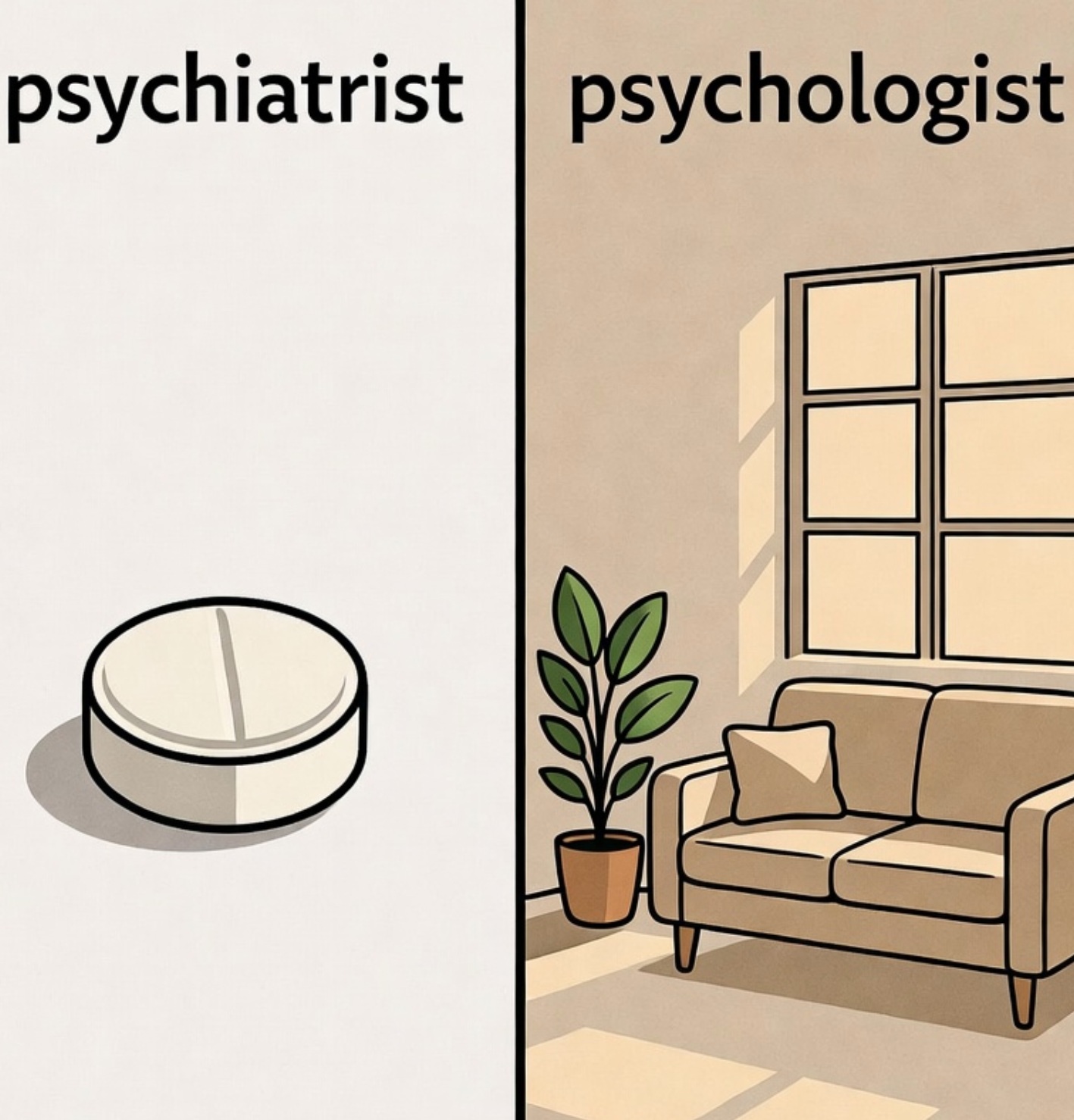
It’s normal to be unsure whether a psychologist or psychiatrist is right for you. Both treat mental health issues but use different methods. Recognising the key differences helps you access appropriate support faster.
Table of Contents
The Key Difference (Simple and Practical)
Psychiatrists are medical doctors.
Psychologists are mental health therapists.
That distinction determines how they work.
Psychologist | Psychiatrist | |
Psychology degree | Yes | No |
Medical degree | No | Yes |
Can prescribe medication | No | Yes |
Main focus | Therapy, behaviour, coping skills | Medication, medical complexity |
Typical appointment style | Ongoing therapy sessions | Shorter, review-based |
Both are legitimate, evidence-based mental health professionals. One is not “better” than the other, as they serve different purposes.
What a Psychiatrist Does
Psychiatrists work within a medical model of mental illness. Their role is to assess symptoms, establish or clarify diagnoses, and determine whether medication may be helpful. They also monitor side effects, medication interactions, and how physical health conditions influence mental health.
Psychiatric involvement is common with conditions such as bipolar disorder, schizophrenia, severe depression. Appointments with psychiatrists are usually less frequent and more focused on treatment planning and medication review rather than ongoing talk therapy. Access to a psychiatrist generally requires a GP referral, and Medicare rebates apply.
What a Psychologist Does
Psychologists specialise in psychological therapy. Their work focuses on understanding thoughts, emotions, behaviour patterns, and the impact of life experiences. Therapy aims to reduce symptoms, improve functioning, and help people develop skills that support long-term mental health.
Psychologists commonly work with anxiety, depression, trauma, stress, burnout, grief, relationship difficulties, and adjustment to life changes. Sessions are typically longer and regular, allowing time to explore though and beahvioural patterns, practise strategies, and make meaningful and lasting changes.
Psychologists use evidence-based therapies such as cognitive behavioural therapy, acceptance and commitment therapy, and trauma-informed approaches. They also provide psychological assessments when a deeper understanding of thinking styles, learning profiles, or personality factors is helpful.
Diagnosis and Overlap
Both psychologists and psychiatrists are trained to diagnose mental health conditions. Both understand the interaction between biology, psychology, and environment. Both may use therapeutic conversations as part of treatment.
The difference lies primarily in whether treatment centres on medication management, psychological therapy, or a combination of the two.
When Seeing a Psychiatrist Is Usually Helpful
Psychiatric assessment is often appropriate when medication may be required, or when symptoms are severe and worsening.
Your GP plays a central role in determining whether psychiatric input is appropriate and can organise referrals when needed.
When Seeing a Psychologist Is Usually Helpful
Psychological therapy is often the first-line treatment for mild to moderate anxiety and depression, stress-related difficulties, trauma, and relationship problems. It is also valuable when someone wants structured support, coping strategies, and a deeper understanding of ongoing emotional or behavioural patterns.
Many people seek therapy not because they are in crisis, but because they want help managing life more effectively. A psychologist can support both recovery and prevention.
A GP Mental Health Care Plan allows access to Medicare rebates for a set number of psychology sessions.
Working With Both
For some people, the most effective care involves both professionals. A psychiatrist may manage diagnosis and medication, while a psychologist provides regular therapy. This collaborative approach is common and often beneficial, particularly for moderate to severe mental health conditions. Coordination is usually managed through your GP.
Where to Start
If you are unsure what type of support you need, the best place to start is by booking an initial session with our psychology clinic. You do not need a diagnosis, referral, or treatment plan beforehand.
During your first appointment, we will take the time to understand what is going on for you, assess your symptoms and circumstances, and clarify the most appropriate therapeutic approach. Based on that assessment, we can recommend the type of therapy that is likely to help and advice whether additional support, such as medication or psychiatric input, may be useful.
Once your session is booked, you can visit your GP to obtain a Mental Health Care Plan if you wish to access Medicare rebates. Starting therapy does not require everything to be decided upfront, the priority is to begin care and work out the next steps together.
Please note that this blog post by Personal Psychology, clinical psychologists, and is not intended to provide professional advice. If you or someone you know is experiencing mental health difficulties, it is important to seek help from a qualified healthcare professional.